It's that time of the year when I look back at the past year in the newsletter space and the trends and insights to be found. This is the 6th annual State of Newsletters report. If it's your first one, these reports are based on the newsletters submitted to InboxReads and data from our user base.
As you'll see, in 2025, there's been no noticeable slowdown in the newsletter industry. The number of newsletters has continued to grow, and the platforms that support them have grown to new heights.
Let's dive in!
Newsletter Topics

The most popular topics covered by the newsletter submissions received this year were tech, business, and startups. Newsletters covering AI grew from 4% of submissions last year to 6% in 2025. Pretty unsurprising as AI has penetrated every aspect of our lives this year especially.

Now let's look at how the newsletter topics have changed over the years. In the past year there haven't been too many changes here. You can see since 2018 that the percentage of software development & programming newsletters has continued to decline and I think this is just a reflection of how newsletters have grown from a niche medium to covering topics for everyone.
But the top topics seem to have stabilised this year and I only expect to see changes going forward if some new trend in culture emerges the way AI did in the past few years.
Check out more data on newsletter topics in our topics section.
User Interests
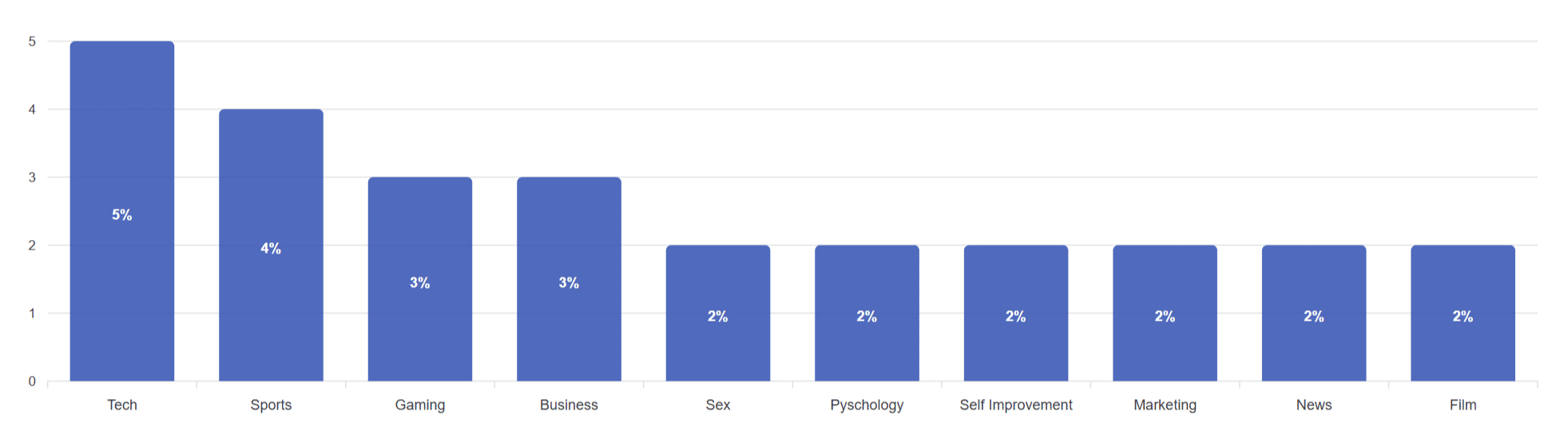 The newsletter topics InboxReads users were actually interested in have tended to differ from what's been submitted, but this year there's been a change.
Tech was the most visited newsletter topic this year, dethroning sports. Travel newsletters dropped out of the top 10, which is very surprising to me, considering how often it's been there in the past. Business, marketing, and news all entered the top 10 this year.
Email Service Providers
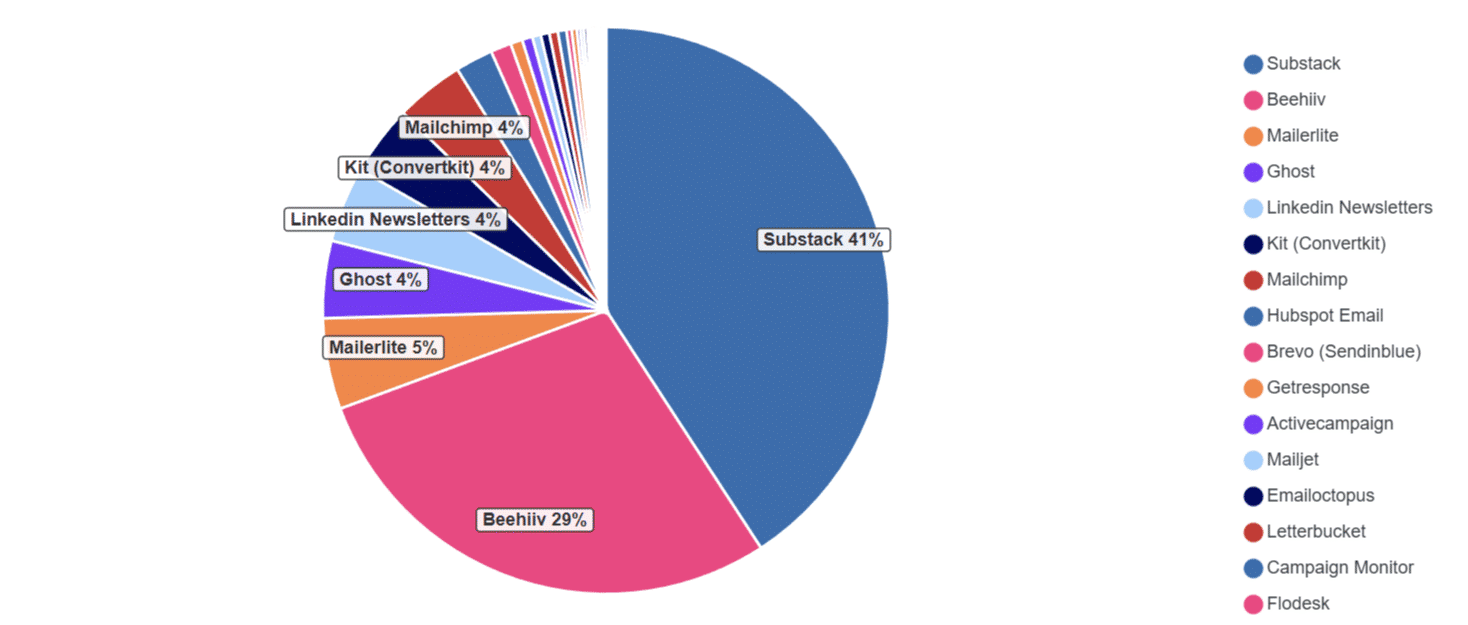 Substack remained the most popular email service provider with 41% of newsletter submissions this year a slight increase from 40% last year. beehiiv had a slight decline from 33% of submissions to 29%. Last year, I was curious if it'd surpass Substack, but it is tough to beat the brand recognition Substack has built as basically a synonym for email newsletters.
Mailerlite came in 3rd with 5% of submissions in 2025. A big step up from previous years, when it didn't rank in the top 5. LinkedIn newsletters also came in joint 3rd with 4% seems like their investment in newsletters is paying off.
Ghost submissions declined from 8% to 4%, another surprising change, as it seemed to be growing over the past years.
Kit (formerly Convertkit), and Mailchimp make up the rest of the top 5.

Now, if we look at the popularity of ESPs over the years, you can see how Substack's market share has remained flat but significant. beehiiv has also shown consistent growth. Seems like those two are dominating the space and the others are blips on the radar. I'd love to see some of these companies continue to invest in their product and marketing but it is a tough space to be in.
How Long Did They Survive?
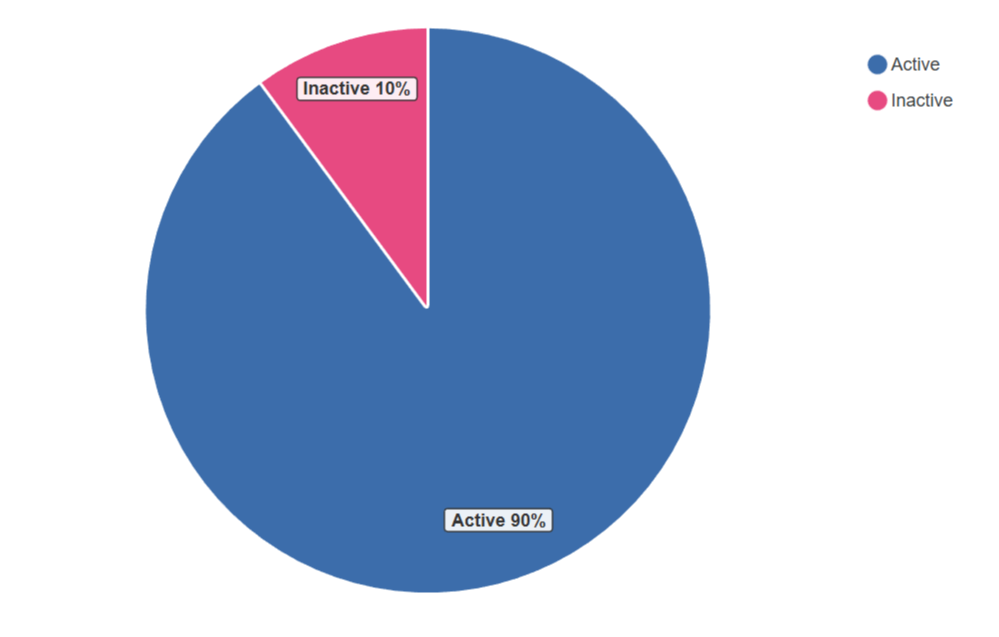 Of the submissions added to InboxReads this year 10% were already inactive by the time of writing. In 2024, this was just 8% of submissions but not a significant change.
Sending rates

Weekly sending continues to be the most popular rate for newsletters at 54%. Daily newsletters are 2nd at 19% and monthly sending is the least popular at only 7%. These numbers are incredibly similar to last year's and show that there is some consensus on the best rates to send for most newsletters.
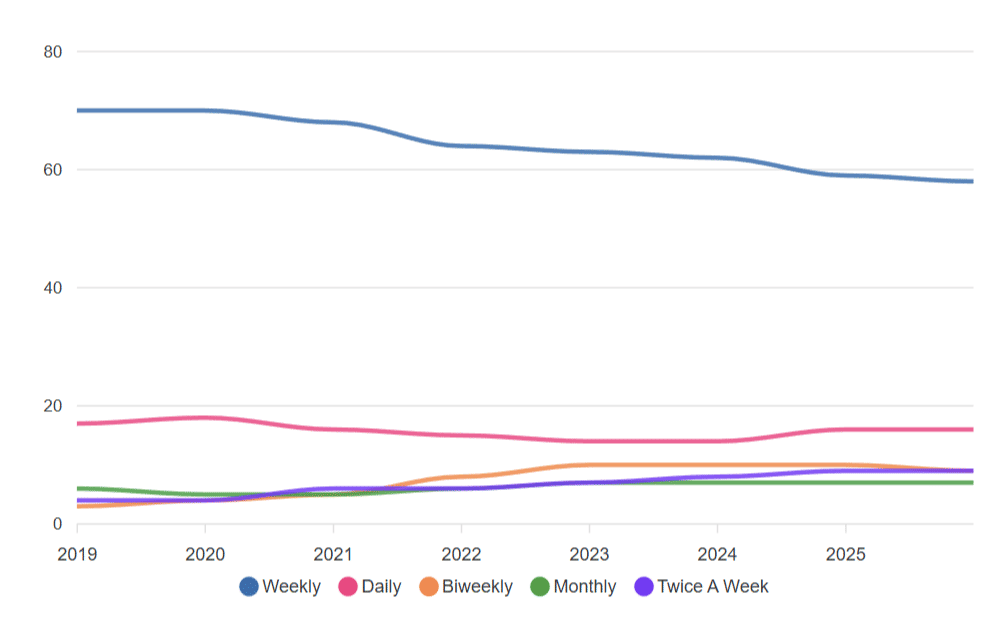
Now looking at sending rates of all newsletters on InboxReads added over the years we can see weekly sending has declined a bit over time in popularity. Daily sending has always been number 2. While the other sending rates went from almost non-existent to taking chunks out of the proportion that belonged to weekly newsletters.
Monetization

The percentage of paid newsletters submitted in 2025 was just 2%, the same as last year. Newsletters with paid upgrades dropped from 12% of submissions ot 8%. Free newsletters grew from 87% to 91%.
It suggests there's been a decline in newsletters using paid subscriptions as their monetization method.

This is the first year where there hasn't been much increase in the percentage of paid and upgradable newsletters.

77% of newsletters submitted in 2025 were interested in sponsorships and ads compared to 72% last year.
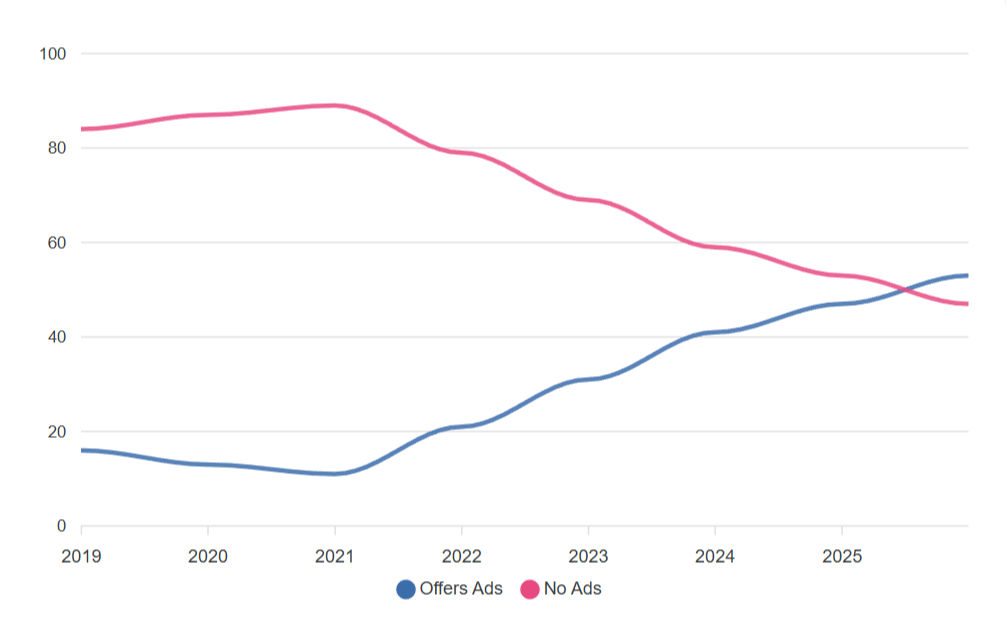 Monetization via sponsorship has grown over the years and continues to. This was the first year that more submissions offered sponsorships than not.
This all suggests sponsorships have become the best form of monetization for most newsletters unlike paid subscriptions. No surprise then that Substack is finally getting into the sponsorship space.
Cross Promotion

61% of newsletters submitted in 2025 were interested in cross promotion, down from 74% last year.
This continues a decline that started in previous years. I do think ineffective automated cross promotions had some part to play here as it diluted the success of the method and maybe turned some creators off.
What's Next?
There haven't been any big surprises in the trends seen in 2025 vs previous years. Substack and beehiiv have solidified themselves as the biggest email service providers while others fight for the rest.
Sponsorships continue to be the easiest and most popular way to monetize a newsletter. Paid subscriptions are great but harder to pull off and not right for every audience.
The variety of newsletter topics continues to be very diverse and there's still demand for topics that don't crack the top 10 of submissions. If you're an expert in a niche that's not being catered to it's worth starting a newsletter there.
You can dive deeper into all this data from our stats dashboard. It's full of the same stats and more in interactive graphs and charts. You can also browse all InboxReads stats from 2018 to the present.